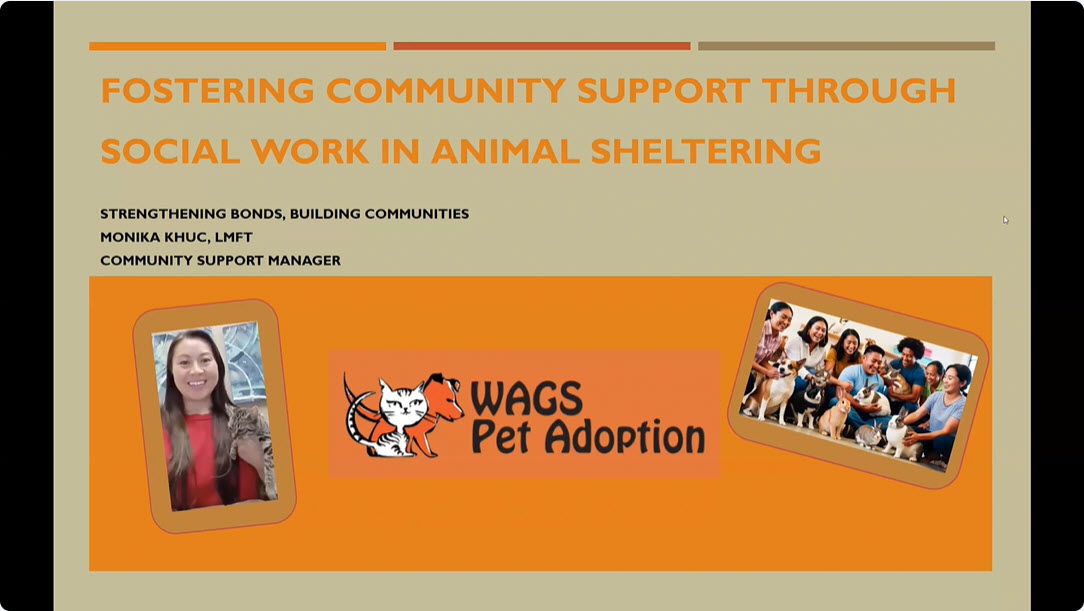
Learn how Monika Khuc, LMFT and Community Support Manager at WAGS Pet Adoption in Westminster, California, helped implement a social work-informed approach to address barriers faced by diverse communities, including the Vietnamese community. By centering diversity, equity, inclusion, and belonging principles, WAGS prioritizes the human-animal bond and keeping pets and families together.
Español
Aprender cómo Monika Khuc, LMFT y Community Support Manager de WAGS Pet Adoption en Westminster, California, ayudó a poner en práctica el trabajo social para reducir las barreras a las que se enfrentan diversas comunidades, incluida la comunidad vietnamita. Al enfocarse en los principios de diversidad, equidad, inclusión y pertenencia, WAGS da prioridad a la conexión entre humanos y animales y a mantener juntas a las mascotas y sus familias.
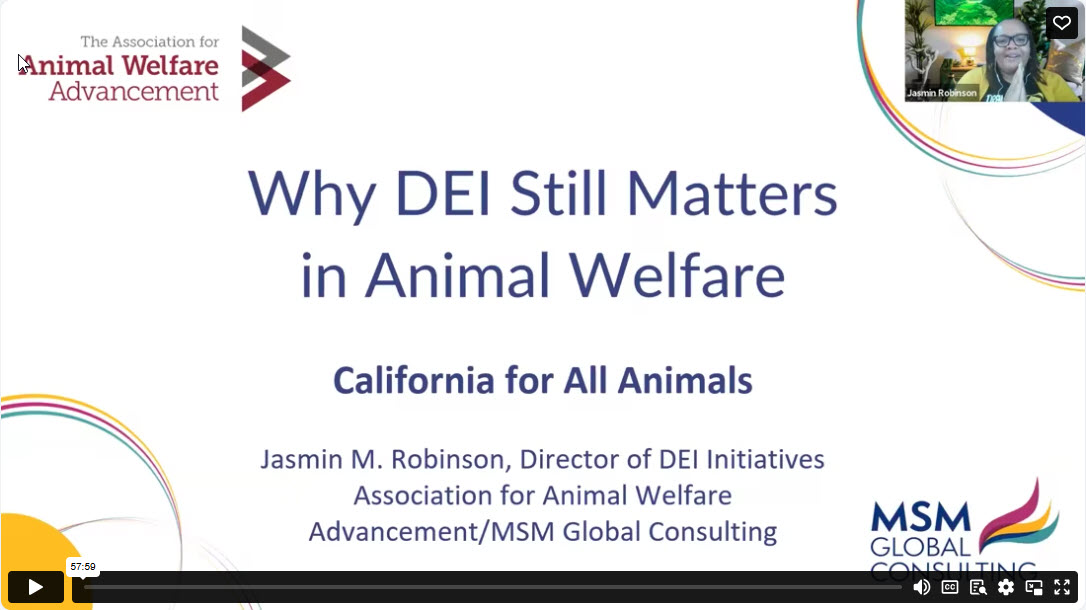
Why does diversity, equity, and inclusion still matter? At this All Call with Jasmin Robinson (Director of Diversity, Equity, and Inclusion Initiatives with The Association for Animal Welfare Advancement and MSM Global Consulting), attendees answered for themselves:
More animals finding homes. Keeping animals in their homes. Better meeting the needs of the community, not just what we think the needs are. Better understanding of cultural perspectives of pet ownership. Better engagement with multiple communities. Diversity in problem-solving. More interesting conversations. Closer teams. Trust-building within communities. Healthier and happier communities. Expanding community.
Nationally, we’re experiencing a difficult period of pushback that threatens this collective vision and our shared values, Jasmin acknowledged, even as the 2024 State of DEI in Animal Welfare Report shows we’ve started to make progress in our field. We can reject attacks aimed at reversing civil rights gains and freedom from discrimination, and choose to respond in ways that bring us closer to each other and the reality we want to see.
“The more we are aware of what diversity, equity, inclusion is—and I would love to emphasize equity—the better that we can be in terms of recognizing, assessing, and addressing needs in particular areas [of our organizations and communities],” Jasmin emphasized. It’s not only key to attracting and retaining talented teams, but also building a stronger coalition of animal well-being partners and advocates, and fostering innovative solutions to the issues that affect pets and the people who care for them.
Those are goals worth fighting for—for animals, our communities, and ourselves. Watch Jasmin’s presentation for concrete steps we can each take at the individual, interpersonal, and organizational levels to leverage DEI in animal well-being, plus real-talk advice on meeting this moment without burning out.
What we mean when we talk about DEI
Diversity: Welcoming people with different backgrounds and embracing our differences, whether related to race, age, gender, where someone comes from, who they love, physical ability, or other aspects of identity.
Equity: Ensuring fair treatment and access to opportunities—recognizing that racism, sexism, ableism, xenophobia, and other intersecting forms of oppression continue to give some people advantages while holding others back and harming all of us. Equity means understanding how these unfair systems impact us, our workplaces, and communities and working to level the playing field so everyone can thrive.
Inclusion: Creating a culture where everyone feels like they belong—where people of all backgrounds are represented, heard, and respected.
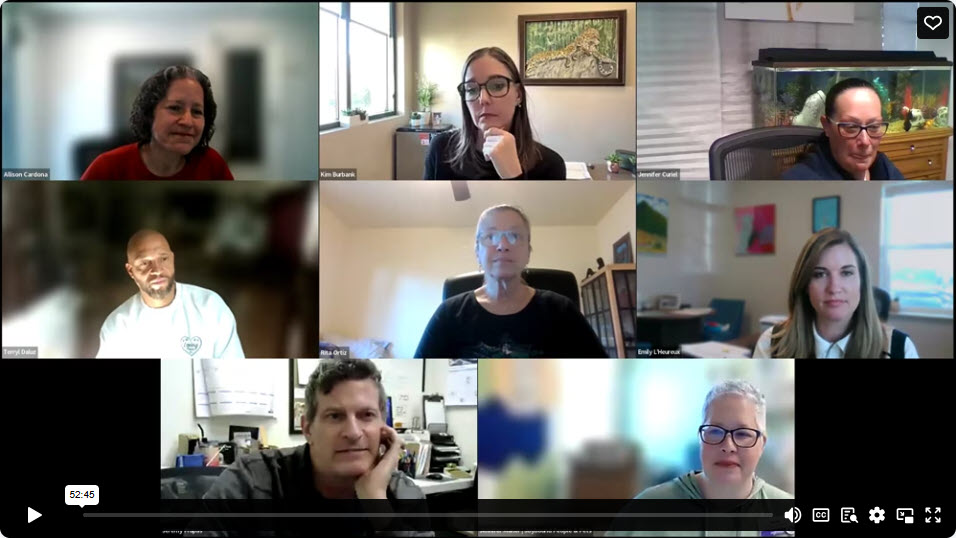
In this AllCall, we heard on-the-ground fire response and mutual aid updates from Los Angeles County. Over 200 animals placed in foster homes over the last week at LA Animal Services. More than 1000 animals to date reunited with guardians through combined efforts at Pasadena Humane. Field officers setting up feeding stations and traps for animals still in evacuation zones.
“I have been both heartbroken and overwhelmed with gratitude during this whole crisis,” Kim Burbank, Pasadena Humane philanthropy manager, said. “It has been amazing to see not only our community, but the world come together to support our communities across LA.”
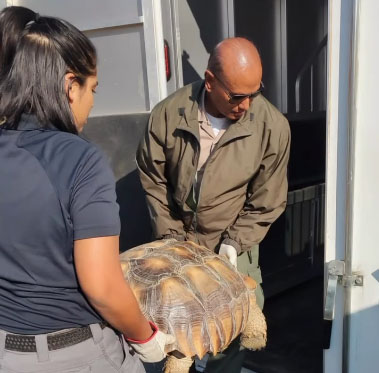
“It almost gives me goosebumps how much everybody has reached out to us and helped us,” LA Animal Services’ Jennifer Curiel said. She shared that field officers are also coming together to help animals in fire zones, from koi fish to tortoises and even a bobcat. (Photo: LA Animal Services)
Terryl Daluz, founder and president of Loving Paws Inc., was one of many who joined the call to offer support and gratitude as communities care for displaced pets and people.
“We were in the middle of the blackout and said, ‘How can we help?’ Losing electricity doesn’t compare to people losing their homes.”
Loving Paws is fundraising for a mobile van so they can meet people where they are; in the meantime, they can offer free baths, grooming, and limited boarding at their locations in Sylmar and Van Nuys—and, if needed, anywhere they have access to running water with their portable tub. Know of anyone else offering discounted or free grooming or boarding? Fill out this form for Pasadena Humane.
The full All Call resource list includes shelters’ suggestions for pitching in as well as grants, food banks, housing help, and other forms of support from organizations like HEART LA, Best Friends, betterTogether Forever, Greater Good Charities, The Little Lion Foundation, and more. In partnership with Patitas y Palabras, Cal for All Animals continues to offer translation support for shelters in the LA area and across the state.
In the aftermath of the first sparks of fire, one Pasadena Humane volunteer noted, there have been moments of hope, ones we create together. It takes a village to repair, reunite, and rebuild. The fires have shown us that our village extends far beyond LA’s 88 cities and unincorporated areas; it’s strong, big-hearted, and ready to act.
We know what scarcity feels like, because every day we try to figure out how we can do more for animals and the people who love them, and often it feels like what we can do isn’t enough. We know what scarcity feels like, because we live in a culture that constantly tells us there are not enough resources for us all, while income inequality grows. We know because we live in a culture where the blame for that inequality is shifted to Black, Indigenous, and people of color, to immigrants, and to anyone who is struggling to get by.
Sometimes we blame pet guardians, and sometimes we blame shelters. We blame each other. We know what it feels like, because we are told a zero-sum story that says if some of us succeed, others have to fail; if some of us have enough to care for ourselves and our pets, others have to suffer. This story costs everyone.
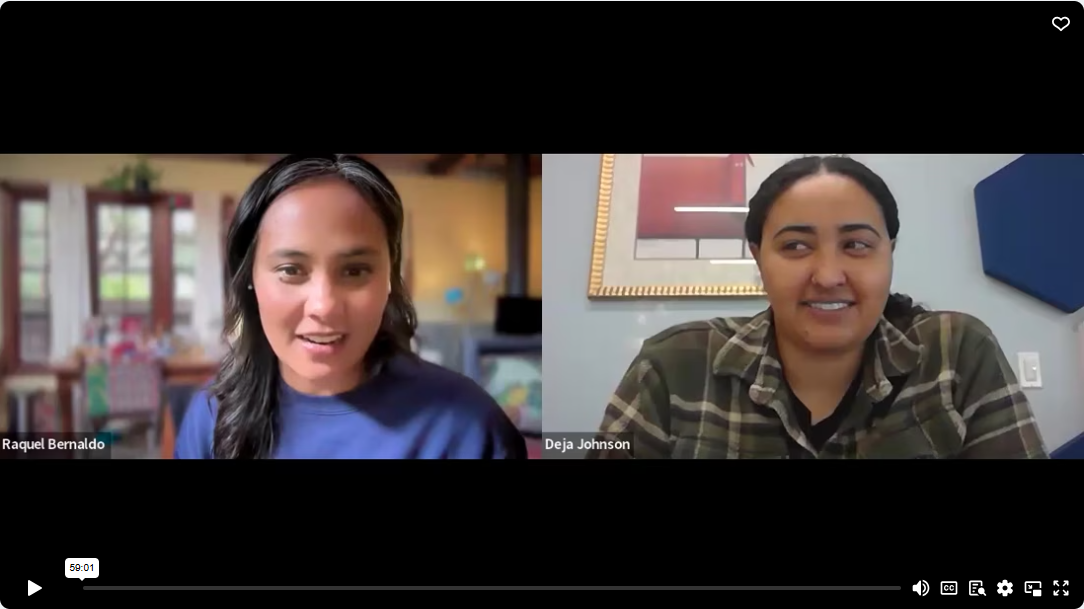
This story also reinforces the charity model that has shaped mainstream animal welfare and philanthropy from the beginning, but we aren’t stuck with it. In this recording, Friends of the Alameda Animal Shelter (FAAS) Community Services Manager Raquel Bernaldo and Community Services Lead Deja Johnson showed us how FAAS is shifting to a different model, one that more accurately reflects the relationships they want to cultivate with animals and people in their community and with one another.
What are drawbacks to an approach that centers charity? “Charity models can really sort of reinforce a sense of scarcity by adding requirements like income verification, residency checks, or eligibility screening, and in a charity model these requirements are often used to determine who ‘deserves’ assistance based on a set criteria,” Raquel explained. “This approach can really direct resources to specific groups, but it can also create barriers, especially for people with complicated situations or urgent situations, or who might not have access to required paperwork.
“Although charity can really be helpful for immediate relief, it often positions one group as the giver and the other as the receiver, and then sets up…power dynamics that can feel exclusive and really don’t align with with the set of values that we’re really trying to hold center as we work with people in our community and build community.” What is a mutual aid model, and how is it different?
Mutual aid moves beyond charity’s limitations by eliminating these requirements and conditions and instead focusing on building connection, trust, and safety. Raquel and Deja don’t wait for people to come to them. When they’re getting to know people in the community, including unhoused folks, they are up front about what resources FAAS has to share via their Healthy Pets Healthy People programs, from pet food and emergency vet care assistance to vaccines and spay/neuter vouchers, without assuming what community members need—and they bring the good dog treats!
Deja emphasized the importance of genuine care, consistency, and showing up without expectations or judgments. “I want [people] to feel that they’re not an afterthought. And I think that’s something within a traditional charity model versus mutual aid approach. You know, they’re not an afterthought. This is their right, and they have a voice, too.” It’s an approach that recognizes pet owners are the experts of their own lives and of their pets, because they know them best, Deja said.
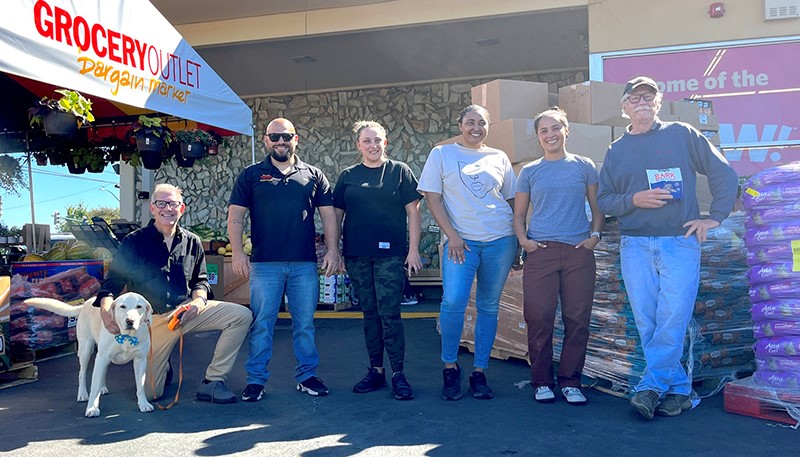
Through Deja and Raquel’s leadership and cultivation of community, Alameda has come together to make sure everyone can access food for their pets, no exceptions. (Credit: FAAS)
Scarcity tells one story; data might tell another. Raquel and Deja acknowledged feelings of scarcity swooped in whenever the pet food pantry, a program entirely funded by donations, wasn’t fully stocked. The Alameda community is close-knit, and Deja knew they could come together to make sure no pet goes hungry. She focused on making asks through social posts and outreach to Alameda businesses and community organizations, and once more people knew about the program, food flooded in.
Deja began closely tracking pet pantry inventory and use and discovered two surprises:
FAAS had enough food to meet the need and could actually give out more food.
Though the scarcity mindset could make it seem like pet guardians from other communities were overrepresented, that actually wasn’t true.
We know what scarcity feels like: stress, grief, empathy fatigue, blame, burnout. Mutual aid offers us a way to tap into our collective strength to support each other when we need community most.
This shift won’t happen overnight, Raquel said, but we can start by asking, “If you need something, how can I support you in it? We we can build that trust and mutual respect with one another. Then we’re going to build that trust and mutual respect with the community. We, at the end of the day, can’t do this work alone.”
We will show up for each other and for the animals and people in our communities now and over the next four years. Let’s build our mutual aid muscles together: Start by watching our conversation with Raquel and Deja. If you want a deeper dive, California Program Manager Nadia Oseguera-Ramón recommends checking out Mutual Aid: Building Solidarity During This Crisis (And the Next) by Dean Spade.
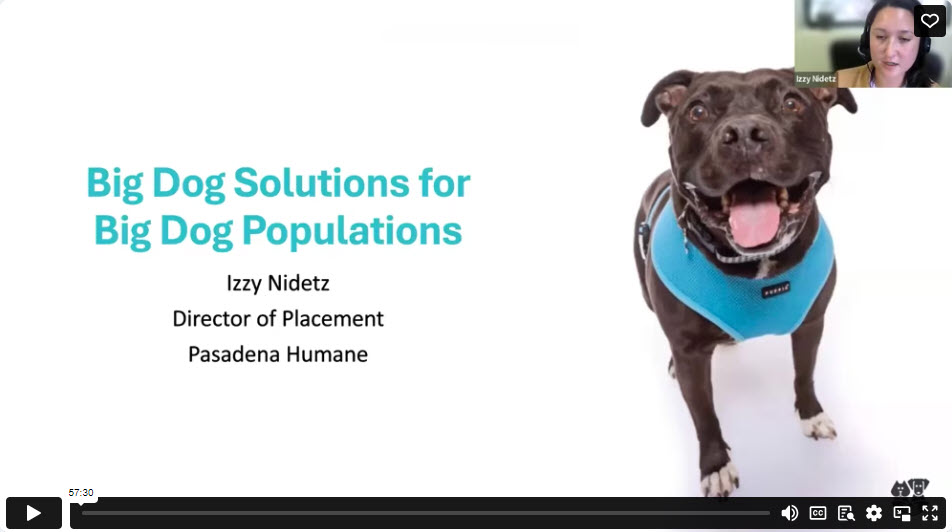
On her first day of work at a shelter, Izzy Nidetz met a shy dog named Dictionary, and they steadily built a bond; on her last day at the job, she successfully facilitated Dictionary’s adoption. Izzy has been chasing that amazing feeling, along with better solutions for harder-to-place dogs, ever since. As the current Director of Placement at Pasadena Humane, Izzy visited the All Call to break down her team’s creative, community-centered and results-driven approach to identifying big dog solutions for big dog populations.
Izzy outlined four main initiatives that are helping decrease length of stay and increase adoptions, relieving some pressure for everyone as intake numbers tick up, including an adoption trial program with a 95% placement rate! Here’s an overview of the programming you’ll hear about in the presentation:
Izzy and her team started slow by working with existing volunteer dog walkers, then fosters. The temporary fostering concept turned out to be a big hit when they introduced it to their community via in-person public training sessions, and now field trip training is incorporated into all foster parent training. The field trip option is popular with people who may already have pets at home, Izzy said, and community members who volunteer to keep a dog overnight for a sleepover often turn into longer-term fosters. So far this year, they’ve completed 526 field trips and 80 sleepovers.
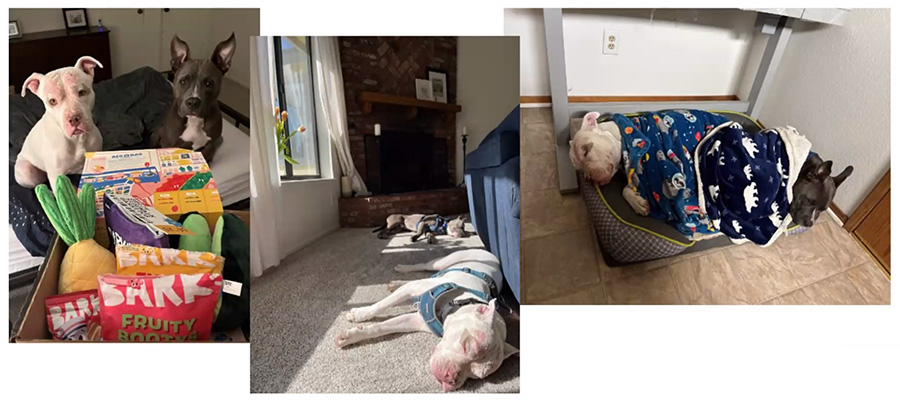
A double-success story: Izzy shared that Elfie (the gray Pittie snoozing under the polar bear blanket) was the longest-stay dog in the shelter until she was adopted via the adoption trial program—by the same family who used the trial program years earlier to adopt Tofu, Elfie’s new best friend.
Adoption trials
For certain dogs who are traditionally harder to place, like German shepherds, pit bulls, and huskies, adopters are offered a 10-day trial period to test whether a dog is a good fit. The goal is to address people’s common fears—that, for whatever reason, the dog won’t work out—and give them space for decision-making, all while providing the supplies and support needed to build adopters’ comfort and confidence. It works! In 2023, 161 out of the 169 dogs who participated in trials were adopted.
Special events
Izzy and her team are constantly brainstorming new ways to bring people in and get dogs out. At their first Doggy Speed Dating event, the vibes were on point, but the timing—Mother’s Day—discouraged attendance. Still, two dogs were placed with fosters, and the next time they hosted date night ahead of an adoption event, ten dogs were placed into foster homes. They’ve also piloted public workshops, including a primer on Living With Large Dogs to dispel myths about what’s required, and Dog Fostering 101 sessions in their community classroom space. Both were a good reminder of the new fosters we can find and the deeper connections we can make when we’re all in the same room.
Foster pleas
You won’t get an answer if you don’t make the ask! Izzy and her team have fine-tuned the language they use on social posts, volunteer email blasts, and website pop-ups to make it clear why, when, and how community members can help. “If we’re not advocating for ourselves and being transparent with the community,” Izzy pointed out, “they’re not going to help us.”
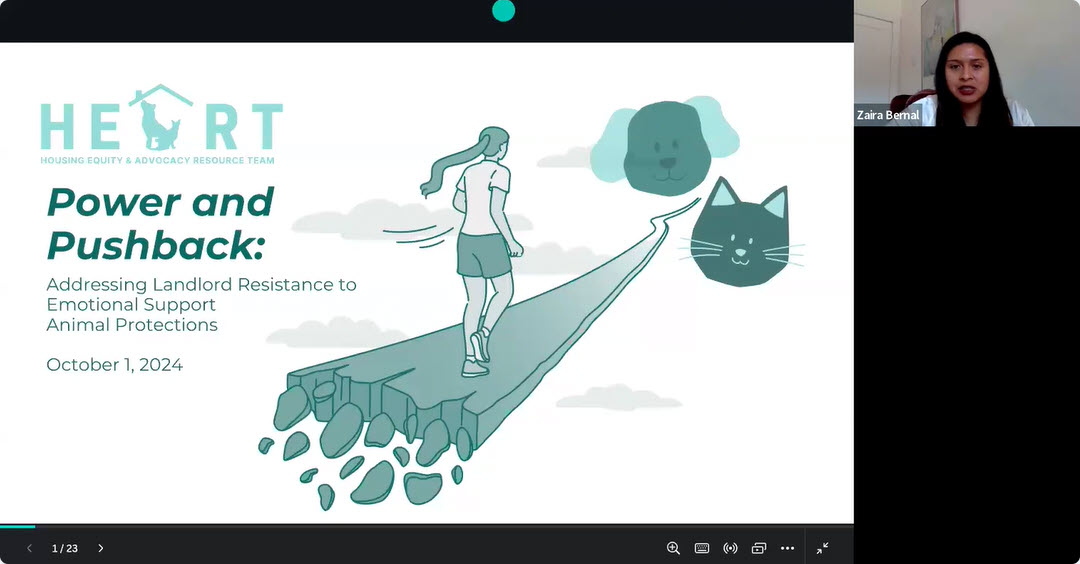
We know the human-animal bond is powerful, period. Whether or not there’s a signed letter to prove it, Emotional Support Animals (ESAs) are lifelines for their people. But some landlords refuse to respect state and federal protections for support animals and instead threaten to push tenants and animals like Minnie out of their homes. At this week’s All Call, HEART LA’s Zaira Bernal (Paralegal) and Diana Cruz (Program Director/Law Clerk) remind us that when we act in community, we can speak truth to power and meaningfully push back—keeping more pets out of shelters and affirming the rights of those of us with mental, emotional, or physical disabilities.
There are many ways to start!
Identify opportunities for intervention in your community. First, understand who housing providers are, from individual landlords to corporations, and the role they play in our housing ecosystem. Diana and Zaira shared that according to HEART LA data focused within Los Angeles County, individual landlords account for nearly 40 percent of eviction threats. Collect and review intake data so that you can pinpoint how many animals enter your shelter due to housing challenges. Share All Calls Part 1 and Part 2 with colleagues at your shelter, and take the free Keeping Tenants and Their Pets Together training at Maddie’s University together.
Create a local network of people who can write ESA letters—that might even include you! When one All Caller expressed interest in providing letters and had questions about potential liability, Diana and Zaira reminded us that letter writers are simply “reliable third parties” who aren’t vouching for the animal. Instead, they’re attesting that the pet guardian has a disability and that their animal is relieving an associated symptom or symptoms.
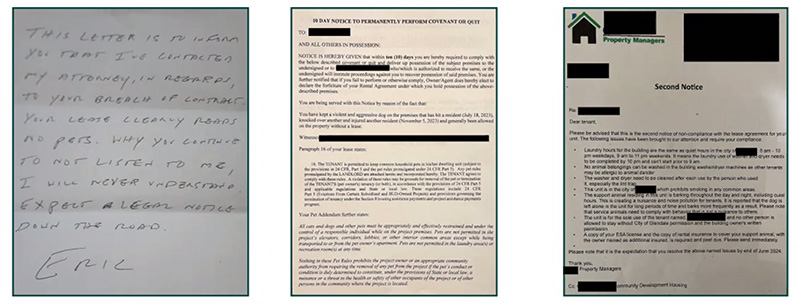
Share what you’ve learned. Get familiar with the common tactics property owners use to intimidate tenants—Diana and Zaira shared six, including making false allegations and piling on unnecessary paperwork—and how to respond. “An educated tenant is a stronger tenant,” Zaira pointed out. When shelter staff has the information they need to support and reassure tenants who feel they have no choice but to give up their pets, a better outcome is possible for everyone. Make HEART LA resources available to staff and community members, or create your own flyers to share.
How do you know which kind of notice actually requires action on behalf of the tenant? Diana and Zaira break it down in their presentation. Here’s a hint: an official notice requires certain language that the handwritten note on the left lacks.
Build relationships to build power. Start a conversation, and listen. Invite partners, staff or volunteers from community organizations, and people with lived experience of this issue to share how it shows up in your community and develop solutions together. Community leaders, pet guardians, and advocates in LA worked together to secure a huge win: COVID-era eviction protections for people who adopted pets through January 2023 are now permanent.
Work alongside partners to hold agencies accountable. Ask how you can apply collective pressure to make sure agencies responsible for enforcing tenant rights and support animal protections are fulfilling their duties, including the California Civil Rights Department, local housing departments, and our elected officials.
Email cal4allcall@californiaforallanimals.com to request a one-on-one deep dive session with Zaira and Diana. They’ll answer your questions and help you make a plan!
Watch this week’s presentation and discussion to discover how often “unauthorized” pets are cited as justifications for eviction, whether a support animal must be spayed or neutered, how to balance asserting ESA protections with the very real fear of losing one’s home or pet, and more.
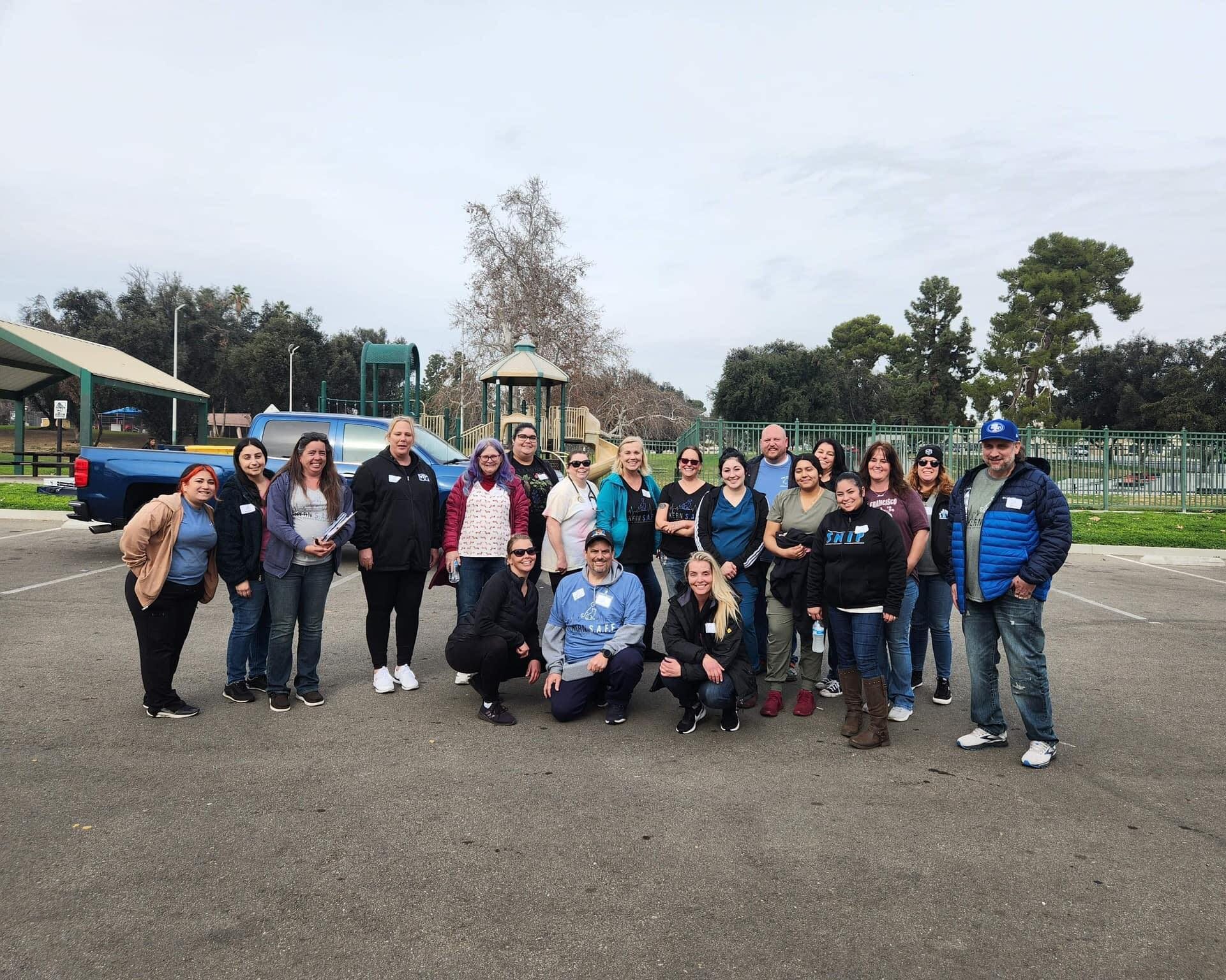
On December 8, 2023, concerned community members from across California’s third-largest county were preparing to meet in Bakersfield to kick off unprecedented problem-solving efforts and rally around a cause. Together, they hoped to reverse the upward trend of healthy animals euthanized in shelters by connecting pet guardians to essential resources, especially low-cost spay and neuter services. The question on everyone’s mind: Could they unite around a common goal to make a difference, despite coalitions falling apart in the past?
Explore the interactive story
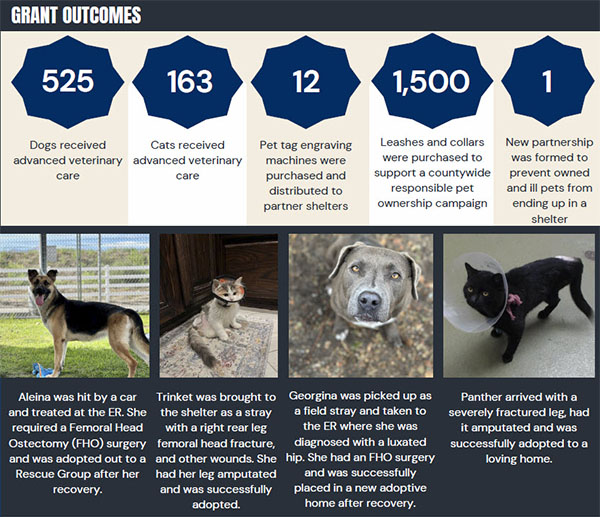
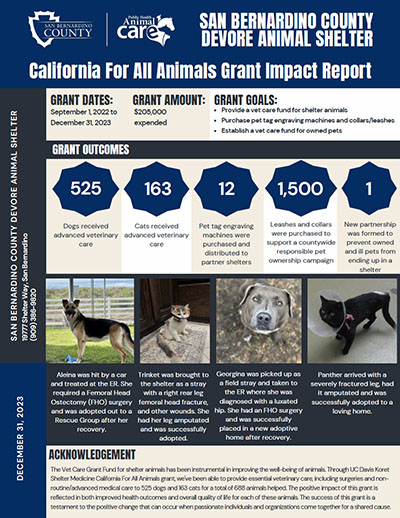
The San Bernardino County Devore Animal Shelter made great use of their $205,000 California for All Animals grant. Among the outcomes:
From the report:
525 dogs received advanced veterinary care
163 cats received advanced veterinary care
1,500 leashes and collars were purchased
“The Vet Care Grant Fund for shelter animals has been instrumental in improving the well-being of animals. Through UC Davis Koret Shelter Medicine California For All Animals grant, we’ve been able to provide essential veterinary care, including surgeries and non- routine/advanced medical care to 525 dogs and 163 cats for a total of 688 animals helped. The positive impact of this grant is reflected in both improved health outcomes and overall quality of life for each of these animals. The success of this grant is a testament to the positive change that can occur when passionate individuals and organizations come together for a shared cause.”
Families find the care they need for their pets in partnership with Vets in Vans and Oakland Animal Services.
They’re far from alone. Rising costs and a nationwide veterinary shortage mean guardians and shelters alike are increasingly unable to get or provide emergency or even routine vet care for animals. Newsweek recently reported that 43% of pet guardians polled were very or fairly concerned about their ability to financially support their pet. In many cases, guardians face two heart-wrenching choices: euthanize to end suffering, or surrender their pet to a shelter for treatment.
But thanks to collaborative community efforts, that’s starting to change. Through California for All Animals grant funding and a partnership with Vets in Vans, Oakland Animal Services connected the families of Blue, Milo, Lady, Beegee and dozens of others with the essential veterinary care they needed to thrive—and stay—together.
But thanks to collaborative community efforts, that’s starting to change. Through California for All Animals grant funding and a partnership with Vets in Vans, Oakland Animal Services connected the families of Blue, Milo, Lady, Beegee and dozens of others with the essential veterinary care they needed to thrive—and stay—together.
112 dogs and 40 cats received care, including dental procedures, mass removals, or treatment for fractures, ears, skin, parvovirus, or panleukopenia.
98 cats, 83 dogs, and 775 community cats were spayed or neutered.
956 animals received microchips and vaccinations.
“We saw again and again the lengths people are willing to go to get their animals the care they need,” the Oakland Animal Services team reported. “Similarly, we see that the desire for people to get their animals spayed/neutered far outpaces our ability to provide the service.”
From an equity and public health standpoint, accessible vet care for all means healthier animals, healthier people and stronger communities. Everyone benefits.
Watch Milo’s story and others at the Vets in Vans Instagram page. (Note that some videos show injuries and/or surgeries.)
“The response we get from people receiving the services is immense gratitude. For staff and volunteers, it’s incredibly uplifting to be able to support people in this way.”
Partnerships and programs like this keep pets out of shelters and with their families, reducing shelter crowding that drives unnecessary euthanasia. From an equity and public health standpoint, accessible vet care for all means healthier animals, healthier people and stronger communities. Everyone benefits. For shelters, the challenge is finding funding outside of grants to sustain these benefits.
Since 2020, the Oakland city budget has been cut each fiscal year, resulting in an over 30% reduction from the 2019 baseline budget. With the city facing another massive deficit, Oakland Animal Services is now confronting the likelihood of additional significant cuts.
California for All Animals has awarded Oakland Animal Services a total of $495,000 in support of free and low-cost spay/neuter, veterinary care, and essential staffing. Our focus continues to be on uniting non-profit, government, and community interests to build a stronger animal care ecosystem for all Californians.
Learn about five actions you, your community group, business, shelter, organization, or community can take to keep and bring pets and people together.
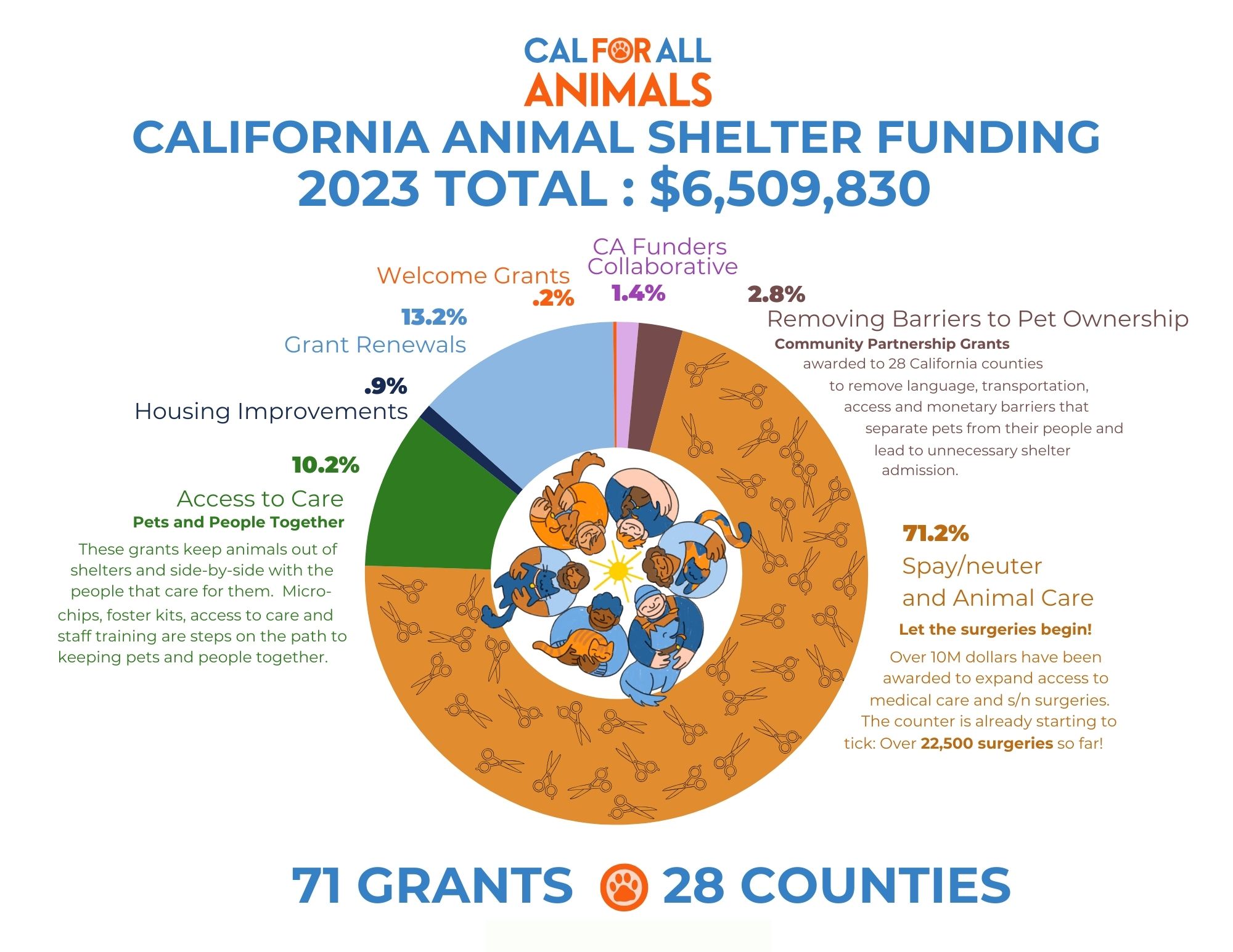
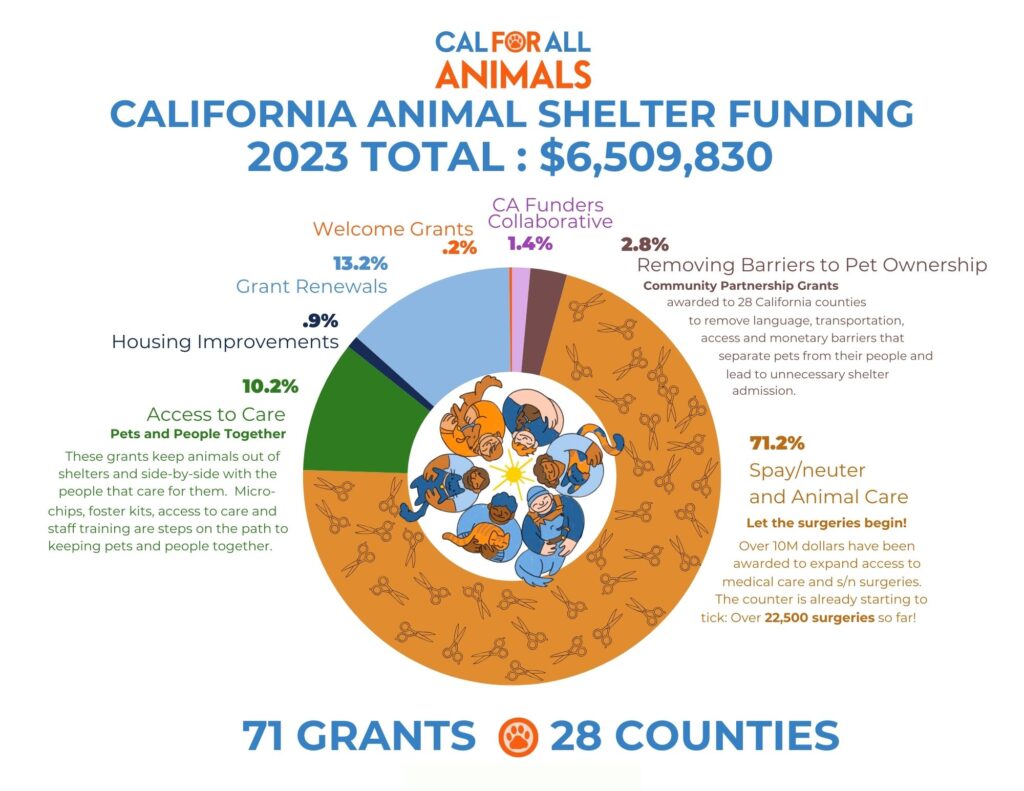
In just over two years, the California for All Animals program has provided nearly $31.5 million in funding to animal shelters across the state. Funding has supported spay/neuter surgeries, veterinary care, supplies, equipment and staffing to keep pets and people together. The 2023 funding strategy was to provide support and partnership on grants awarded in 2022, continue to bridge the 3M spay/neuter surgery gap created during the Covid-19 pandemic, and continue to remove barriers and expand access to care.
Read below to learn more about how the 6.5M 2023 grant support was distributed to support California families and their well-being.
Grant funding has been awarded for shelters to expand surgery capacity and partner with spay/neuter organizations such as CAMP LA, SNIP Bus, Valley Oak SPCA, and Animal Balance to provide low-cost or fully subsidized spay/neuter, vaccinations, and microchips to keep pets in their homes and prevent additional litters of puppies and kittens. Accessible spay/neuter promotes animal health, stabilizes community cat populations, and reduces the number of animals entering shelters. Over 4M dollars was awarded in 2023 expand access to spay and neuter.
Grants made to animal control agencies and municipalities with animal control officers help keep pets in homes. Providing supplies like pet food, crates, fencing repair, and outdoor trolley systems keep pets with the families who already love and care for them. Supportive practices build relationships and address root issues that result in pet homelessness. For example, working with the community to help lost animals stay in their neighborhood improves the chances of that pet returning to their home by a factor greater than 10! Solution-focused programming allows animal control officers to move away from costly, punitive programming that breaks the bonds between pets and families and fills our shelters with pets who already have homes. Resources can be reallocated to focus on animals who do need intervention and enforcement, such as intentional cruelty, domestic violence cases and suspected dog fighting or cock fighting. Over $100,000 dollars have been awarded to support animal control agencies building proactive programs.
Grants made to ensure essential pet services are accessible and inclusive for all Californians. Funding prioritizes bridging the gap between animal shelters and communities that have been disproportionately impacted by racial and economic inequities.Translating materials, hiring multilingual staff and collaborating with human service agencies and other community-based organizations ensures animal shelters can partner with all community members to keep the pets they love by their side.. Over $200,000 dollars have been provided to bridge the gap between California families and access to essential services and resources.
Grants made to community support programs that keep pets with their people. When people are suffering, their pets are too. Animal shelters are partnering with human services agencies and community-based organizations to provide food and supplies, behavior and training services, vaccine clinics, veterinary care, and temporary crisis boarding to keep pets with the people who care for them. Programming and partnerships also provide crucial support and advocacy for Californians experiencing homelessness or domestic violence, with a focus on pet- and people-centered support that removes barriers to accessing safe and permanent housing. Over $500,000 dollars have been awarded to support California programs that keep pets in their homes.
Grants made to foster programming keep vulnerable pets out of shelters. Engaging community members in the temporary care of kittens, puppies and any other pet who would benefit from a home environment allows pets to benefit from socialization and extra care. Shelters are providing the supplies and medical care needed to support foster caregivers preparing animals for adoption. Foster programs allow shelters to expand the care they give to animals in need, reduce the transmission of diseases, increase adoptability of all animals, and reserve space and resources for the most vulnerable animals, those who are injured, receiving extensive medical care or in need of secure housing due to behavioral or custody concerns. Over $500,000 thousand dollars have been awared to keep vulnerable pets out of the shelter.
Grants made to support the care of animals in the shelter improve the well-being of both animals and staff. When animals do need homes, funding provides for the physical, medical and mental well-being of animals who are in the shelter’s care. This includes veterinary care supplies and services, behavior and enrichment, volunteer programs, equipment and supplies, and housing improvements. Every single shelter in California has been invited to upgrade to double-compartment housing which reduces the spread of disease and improves staff safety. See the housing map here: https://www.californiaforallanimals.com/grants/portal-grants/Over $300,000 dollars have been awarded to support the care of animals housed in California shelters.